
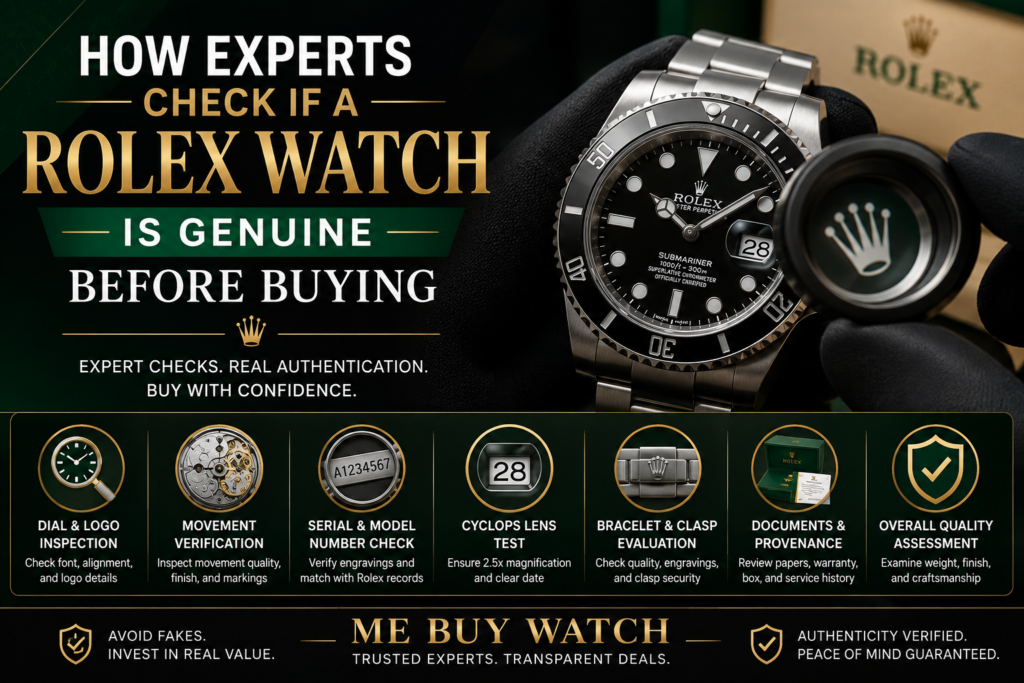
Buying a pre-owned Rolex can be an excellent investment, but it also comes with risks. The luxury watch market is filled with counterfeit models that can look surprisingly convincing to inexperienced buyers. This is why professional watch buyers and collectors follow a detailed authentication process before purchasing any Rolex.
Whether you are planning to buy or sell a Rolex, understanding how experts verify authenticity can help you avoid costly mistakes. In this guide, we will explain the key steps professionals use to determine if a Rolex watch is genuine before buying.
Why Rolex Authentication Matters
Rolex is one of the most recognized luxury watch brands in the world. Its popularity has made it a major target for counterfeit manufacturers. Some fake watches may appear authentic at first glance, but they often lack the craftsmanship, precision, and quality that define a genuine Rolex.
Experts know that purchasing a counterfeit watch can result in significant financial loss. Therefore, authentication is always the first step before any transaction.
1. Checking the Overall Quality and Craftsmanship
One of the easiest ways experts identify a genuine Rolex is by examining the watch’s overall quality.
A real Rolex is made with exceptional attention to detail. The case, bracelet, dial, and bezel should feel solid and perfectly finished. There should be no rough edges, loose parts, or visible flaws.
Counterfeit watches often have:
- Uneven engraving
- Poor polishing
- Lightweight materials
- Misaligned markers
- Low-quality finishing
Rolex is known for precision manufacturing, so even the smallest imperfection can raise concerns.
2. Inspecting the Weight of the Watch
Rolex watches are manufactured using premium materials such as:
- Oystersteel
- 18k gold
- Platinum
Because of these high-quality materials, authentic Rolex watches generally feel heavier than counterfeit versions.
Experienced buyers often notice the difference immediately. While weight alone cannot confirm authenticity, it is an important indicator during the inspection process.
3. Examining the Dial Carefully
The dial is one of the most important areas experts inspect.
Rolex dials are famous for their flawless appearance. Every detail should be crisp, clean, and perfectly aligned.
Professionals check:
- Font consistency
- Logo placement
- Hour marker alignment
- Date window quality
- Printing precision
Even a slight spelling mistake or uneven text can indicate a counterfeit watch.
The Rolex crown logo should also be sharp and accurately positioned.
4. Verifying the Serial and Model Numbers
Every genuine Rolex has unique serial and model numbers.
Experts carefully inspect these engravings because counterfeit manufacturers often struggle to replicate them accurately.
A genuine Rolex serial number should:
- Be deeply and precisely engraved
- Have clean and sharp edges
- Match official Rolex records when possible
The model number helps identify the exact Rolex reference and verify whether the watch components are correct for that specific model.
5. Checking the Cyclops Lens Magnification
Many Rolex models feature a Cyclops lens above the date display.
One of the most recognizable characteristics of a genuine Rolex is the magnification provided by this lens.
An authentic Rolex Cyclops typically magnifies the date approximately 2.5 times, making it easy to read.
Counterfeit watches often have weaker magnification, causing the date to appear smaller and less clear.
Experts always inspect this feature carefully because it is a common area where fake watches fail to match Rolex standards.
6. Inspecting the Movement
The movement is the heart of every Rolex watch.
Professional buyers often open the watch case to inspect the movement directly.
A genuine Rolex movement will display:
- Exceptional finishing
- Smooth operation
- High precision engineering
- Correct Rolex markings
Counterfeit watches frequently use inexpensive quartz or low-quality automatic movements that differ significantly from authentic Rolex mechanisms.
This step usually requires specialized tools and expertise, which is why professional authentication is highly recommended.
7. Listening to the Watch
Many people believe a Rolex should make a noticeable ticking sound. However, authentic Rolex movements are designed to operate very smoothly.
Experts often listen carefully to the watch.
A genuine Rolex produces an almost silent movement because the second hand moves with a smooth sweeping motion rather than loud ticking.
If a watch makes an obvious ticking sound, it may indicate a fake or non-Rolex movement.
8. Reviewing the Bracelet and Clasp
The bracelet and clasp provide valuable clues about authenticity.
Rolex bracelets are engineered with exceptional quality and comfort.
Experts inspect:
- Clasp engravings
- Bracelet construction
- Link finishing
- Crown logos
- Security mechanisms
A genuine Rolex bracelet should feel sturdy and refined. Loose or poorly constructed bracelets can indicate a counterfeit watch.
9. Checking Documentation and Provenance
While paperwork alone cannot guarantee authenticity, it remains an important part of the verification process.
Professionals review:
- Original warranty cards
- Purchase receipts
- Service records
- Rolex boxes and accessories
A complete set often increases buyer confidence and may improve resale value.
However, experts understand that documents can also be forged. Therefore, paperwork is always reviewed alongside a physical inspection.
10. Using Professional Authentication Tools
Many luxury watch buyers use advanced equipment to verify Rolex watches.
These tools may include:
- Magnification devices
- Timing machines
- UV inspection tools
- Precision measurement equipment
Such technology helps experts detect inconsistencies that may not be visible to the naked eye.
Combining professional tools with years of experience provides the most reliable authentication results.
Common Red Flags Experts Watch For
When inspecting a Rolex, professionals pay attention to several warning signs:
- Unusually low selling price
- Poor engraving quality
- Misaligned dial details
- Lightweight construction
- Incorrect model features
- Missing serial numbers
- Poor date magnification
- Suspicious seller history
If multiple red flags appear, experts often recommend avoiding the purchase altogether.
Why Professional Verification Is Worth It
Luxury watches can represent a significant financial investment. Even experienced collectors sometimes encounter sophisticated counterfeit models.
Professional authentication provides:
- Greater peace of mind
- Accurate valuation
- Protection from fraud
- Increased confidence during transactions
Whether you are buying your first Rolex or adding to an existing collection, expert verification can help safeguard your investment.
What You Should Remember
A genuine Rolex is much more than a luxury watch. It represents craftsmanship, precision, heritage, and long-term value. Because counterfeit watches continue to become more sophisticated, professional buyers rely on a thorough inspection process before making a purchase.
From examining the dial and serial numbers to inspecting the movement and verifying documentation, every step plays an important role in confirming authenticity. Understanding these expert techniques can help buyers make informed decisions and avoid costly mistakes.
If you are planning to sell your Rolex and want a secure, transparent, and professional experience, Me Buy Watch offers expert evaluations and competitive market prices for luxury timepieces. Their experienced team carefully authenticates every watch, ensuring a smooth and trustworthy buying process for Rolex owners looking to sell with confidence.
