
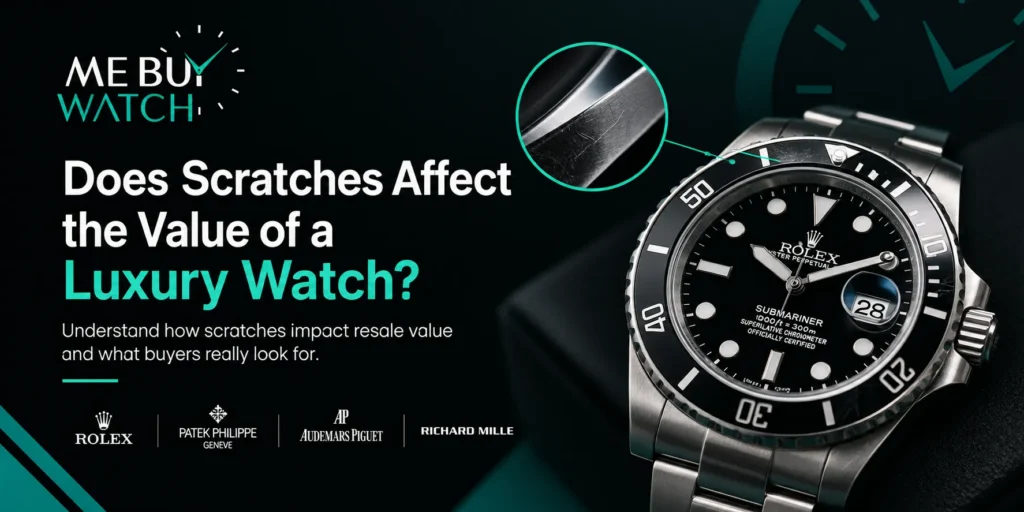
A luxury watch is made to be worn, so small scratches and signs of use are normal. But if you are planning to sell your Rolex, Patek Philippe, Audemars Piguet, Richard Mille, or another luxury watch, you may wonder whether those scratches will reduce its value.
The simple answer is: scratches can affect resale value, but not every scratch has the same impact.
Buyers usually look at the complete condition of the watch rather than judging it only by the presence of scratches. The model, originality, case condition, bracelet, dial, service history, documents, and current market demand can all influence the final valuation.
Are Scratches Normal on a Luxury Watch?
Yes. A watch that has been worn regularly will naturally develop small marks over time. Hairline scratches on the bracelet or clasp, for example, may simply show normal use.
A few light scratches do not automatically mean that your watch has lost significant value. A buyer will normally consider how deep the scratches are, where they are located, and whether there is any other damage.
Deep scratches, dents, damaged edges, or marks that affect important parts of the watch can be more concerning.
For this reason, it is better to describe the condition honestly instead of trying to make a used watch look completely new.
How Do Scratches Affect Luxury Watch Value?
The effect depends on the type and overall condition of the watch.
Light surface scratches may have a limited effect, particularly on a modern watch that has been regularly worn. However, heavy scratches, dents, or damage to the case can make the watch less attractive to buyers.
The case is especially important because its original shape and finishing can be valuable. Excessive polishing can remove small amounts of metal and soften the original case lines. This can become more important for vintage and collectable watches where originality matters.
This means a watch with some honest wear may sometimes be more desirable than a watch that has been aggressively polished.
Should You Polish Your Watch Before Selling?
This is one of the most common questions luxury watch owners have.
There is no single answer for every watch. A professional refinish may improve the appearance of some modern watches, while unnecessary or repeated polishing can affect the original shape of the case.
Rolex states that professional polishing of its case and bracelet should be performed by an Official Rolex Service Centre. Its servicing process also describes refinishing according to the watch’s original finish.
If you are thinking about selling, it can therefore be sensible to have the watch evaluated before spending money on cosmetic work.
A professional buyer can assess the actual condition and explain whether the existing scratches are likely to matter.
Why Over-Polishing Can Be a Problem
Polishing removes a small amount of material from a watch’s surface. When performed carefully, it can remove marks while preserving the intended shape. But excessive polishing can soften edges, alter case geometry, and reduce the original contrast between brushed and polished surfaces.
This is particularly relevant for collectable or vintage watches.
For example, a watch with light scratches and strong original case lines may be more interesting to an experienced buyer than a heavily polished watch that looks shiny but has lost some of its original shape.
So, do not polish simply because you see scratches.
First understand what the watch is worth in its current condition.
What Else Do Buyers Check?
Scratches are only one part of the evaluation.
A luxury watch buyer may also consider:
- Exact model and reference number
- Case and bracelet condition
- Dial and hands
- Originality of components
- Service history
- Warranty card and other documents
- Original box and accessories
- Signs of previous polishing
- Aftermarket or replacement parts
- Current market demand
Two watches with the same reference number can therefore receive different valuations because their individual condition and history are different.
How Should You Prepare a Scratched Watch for Sale?
You do not need to hide normal signs of use.
Start by cleaning the watch carefully according to the manufacturer’s recommendations. Take clear photographs showing the front, back, sides, bracelet, clasp, and any noticeable scratches.
Keep your original documents, box, warranty card, receipts, and service records together if you have them.
Most importantly, disclose any significant damage, repairs, modifications, or previous refinishing.
Honest information allows the buyer to evaluate the watch based on its actual condition.
Should You Sell a Luxury Watch With Scratches?
Yes, you can still sell a luxury watch with scratches.
The important question is not simply whether the watch has scratches. It is what type of scratches it has and what condition the complete watch is in.
If you are unsure whether your watch should be polished, repaired, or sold as it is, getting a professional evaluation first can help you avoid unnecessary expenses.
For owners looking to understand their options, Me Buy Watch provides a way to submit luxury watch details and begin the valuation process. Providing accurate information and clear photographs can help the buyer understand the watch before discussing the next step.
A scratched watch is not automatically a low-value watch. The model, originality, overall condition, history, and market demand all matter when determining its potential resale value.
Frequently Asked Questions
Do small scratches reduce the value of a luxury watch?
Small scratches from normal use may have a limited effect, depending on the watch and its overall condition. Deeper scratches, dents, or damage can have a greater effect on resale appeal.
Should I polish my luxury watch before selling it?
Not automatically. It is better to have the watch evaluated first. Unnecessary or repeated polishing can alter the original case shape and finishing.
Does an over-polished watch lose value?
It can. Excessive polishing may soften case edges and change the original geometry. The effect can be particularly important for vintage and collectible watches.
Can I sell a luxury watch with visible scratches?
Yes. A luxury watch can still be sold with visible scratches. The buyer will consider the scratches together with the model, condition, originality, documents, service history, and other factors.
How can I know what my scratched luxury watch is worth?
You can provide the watch’s model or reference number, photographs, condition details, and available documents to a professional luxury watch buyer. This allows the watch to be reviewed before discussing its potential value.